A training course titled “Communications in the Field of Gender Equality” has been launched at the Ukrainian Institute for Advanced Training of Television, Radio Broadcasting and Press Workers (UTRPI) for employees of the State Emergency Service of Ukraine (SES) responsible for interaction with the media (October 22, 2024).
Weekly online sessions will run throughout October and November, concluding with a test to assess the knowledge acquired by participants.
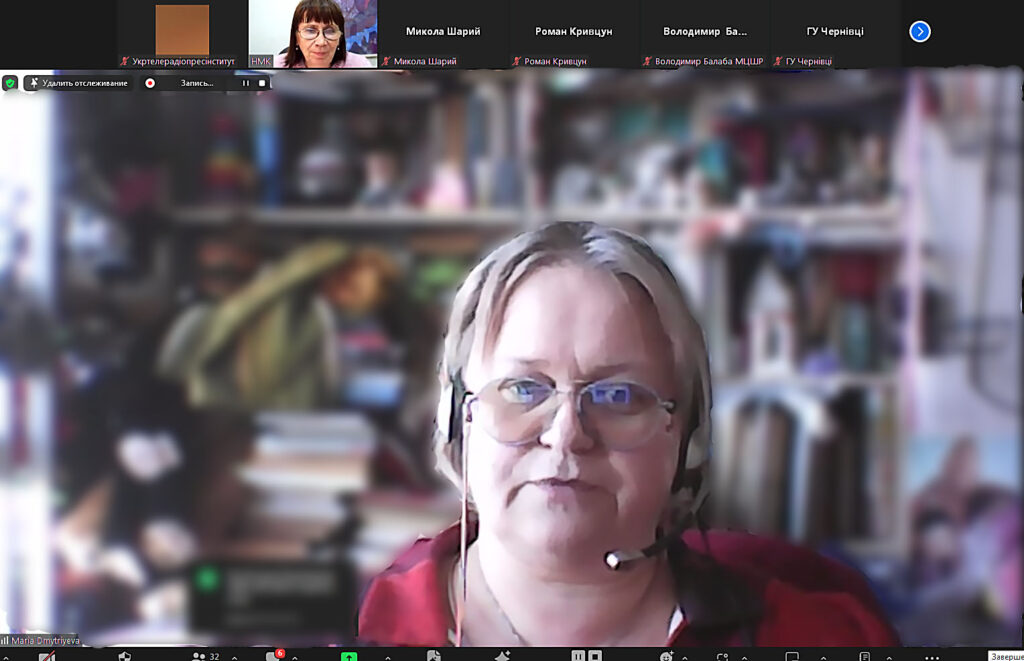
The course curator, Maria Dmytriieva, serves as the Deputy Head of the Department at the the Ukrainian Institute for Advanced Training of Television, Radio Broadcasting and Press Workers. She is a national expert on gender issues and a women’s rights trainer.
While outlining the subject matter, Maria Dmytriieva emphasized the roles of men and women in society, as well as the government’s stance on gender equality. In particular, she highlighted the implementation of the National Action Plan for the UN Security Council Resolution 1325 “Women, Peace, Security,” which the course participants were previously unaware of. This document, in fact, consolidates a set of requirements aimed at establishing and adhering to the principles of gender equality across all areas of state governance, local government, civil society, business, and social relations into a specialized action plan designed to ensure maximum equality between men and women.
Moreover, the engaging exploration of numerous world development hypotheses, the biological relationships within the animal kingdom, and humanity itself—including the roles of both men and women—progressively debunked the long-held belief that men are natural providers and women are caretakers of the home.
Trainer Maria Dmytriieva presented paleontological hypotheses on the origins of humanity, dating back from 750,000 to 1.5 million years ago, when small family groups could be considered egalitarian, where men and women were equals.
Did matriarchy, or “maternal right,” as Swiss anthropologist Johann Bachofen suggests, exist before transitioning into patriarchy? How did the status of women begin to change? What caused women to shift from being people to becoming… property? What are the origins of the genocide of the First Nations? What are the societal expectations for the behavior of men and women?
Participants were able to explore answers to these complex and often debated questions, as well as gain exclusive insights into the nature of gender relations through historical examples from Ancient Rome and Ancient Greece during Maria Dmytriieva’s first lecture.
Overall, the course will provide participants with a foundational understanding of gender issues, including topics such as sexism, misogyny, conflict-related sexual violence, and language tools for ensuring equal rights and opportunities for men and women. It will also cover the legal framework supporting gender equality.